
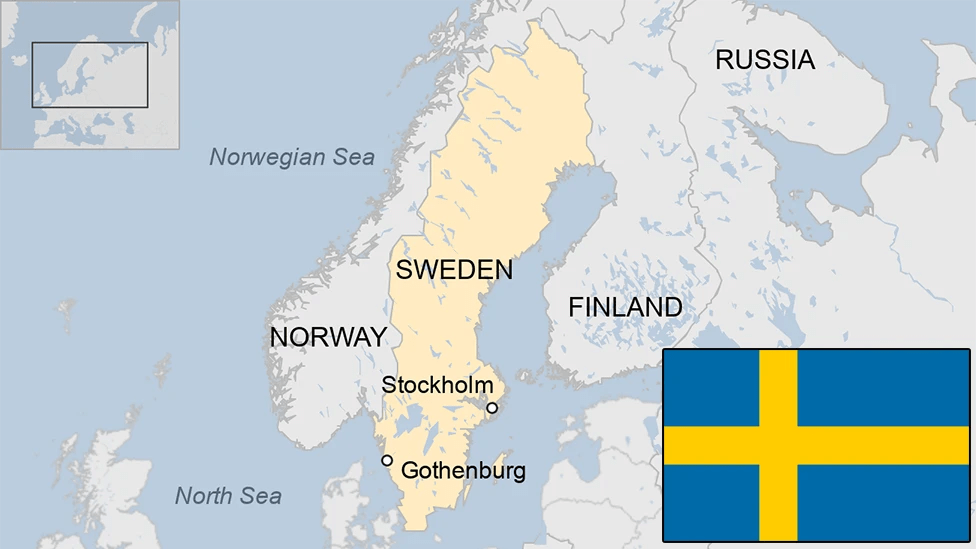
SWEDEN (SEK)
An up-and-coming theme in FX markets for 2026 may be the actual outperformance of Scandinavian currencies led by Sweden, with the Swedish krona (SEK) set to compete against the euro and the dollar. This is building on significant gains already established from 2025, where SEK was one of the best-performing G10 currencies in late 2025.
This proposition can be backed by analysts from Bank of America who have forecasted for SEK to surge further ahead, with the end-of-year 2026 forecast to be EUR/SEK 10.50 and USD/SEK 8.81. MUFG further purports USD/SEK to be 8.38 by Q4 2026, with its spot close on December 31st at 9.19.
Breaking down what these exchange rates mean. 1 euro will cost 10.50 Swedish kroner. If the EUR/SEK goes down, from 10.50 to 10.20, this means the krona is becoming stronger. If the exchange rate goes up, from 1 euro to 10.50 to 10.70, it means the krona is becoming weaker. To put into comparison, why 10.50 is considered a strong position, is that previously the exchange rate in January 2025, was 11.54.
Drivers of SEK growth can be pinned down to three main reasons. Foremost, the fiscal picture of the nation, trade and defence spending, and thirdly monetary policy differentials.
The fiscal picture refers to a government’s finances, giving a snapshot of income, spending, debt, and financial sustainability, and also whether a government is running a surplus or deficit, it in essence maps out the picture of public finances. Norway’s fiscal state has been exceptionally strong over the past decade. This is due to a combination of a low debt-to-GDP ratio, which has averaged 33-34%, much lower than the Eurozone goal of 60%. In contrast Italy’s debt-to-GDP ratio is 137%, the UK’s 95%, and the USs 122%. Norway has a stable budget account, its deficit-to-GDP ratio was recorded as 1.7% at the end of the previous year, in comparison the US’s was sitting around 6% for 2025, the UK’s 3.9%. On top of this, Sweden has had controlled government spending, anchored on its framework set out following its 1991-1993 economic crisis.
Trade and Defence spending is a second primary driver. The country aims for 3.5% of GDP to be made up of boosted defence spending by the end of 2026, in tandem with the nation having joined NATO in 2024. This is backed by its already competitive defence and industrial exporters like Saab, BAE Systems – Bofors AB, and Boghammar Marin. This is evermore bolstered by Germany’s and Sweden’s new bilateral defence partnership, the MofU (memorandum of understanding) signed in late 2025. This framework signifies that the two countries have a partnership in areas covering energy and defence.
With respect to the latter assertion on monetary policy differential’s, FX markets don’t necessarily respond if rates are high; on a futile level they respond to what the rates are in comparison to elsewhere. The Riksbank, the oldest central bank in the world, has a crucial rates relationship with the ECB. The ECB has been dovish over the past few years, conducting a rate cutting cycle, which began in June 2024 from its 4.0 % peak, up until its current hold at 2.15% in June 2025. The Riksbank has cut rates from 4% to 1.75% in this same time period. This narrowing differential has been quoted here as one of the primary catalysts, as it reduces the incentive for carry trades. For years, investors sought the low-yielding SEK as a route in which to purchase high-yielding assets, which in turn pushed the Swedish Krona down. This avenue has been negated, as it has forced positions in SEK to be unwound, lifting the SEK back up.
A bonus point to this argument on why the SEK has bee particularly strong, may also be supported by the softening of the dollar and the euro, especially amid contentions of ‘de-dollarisation’, bolstering the currency pair.
NORWAY (NOK).
For Norway, the strength of it’s currency is really about oil prices, less so the monetary or fiscal picture. The NOK is contestably one of the cleanest oil-linked currencies across the globe, with an embedded structural relationship. This is unsurprising since the oil and gas sector contributes approximately 20% to the country’s GDP, and its advantageous position servicing 2% of the world’s oil supply, given the nation’s small population and it being a non-OPEC member. Analysts from BofA predict that by the end of 2026 for USD/NOK to be 9.26, in tandem with the EUR/NOK at 11.30, advocating the same bullish forecast, parallel to SEK.
The monetary picture as touched on, is less pressing in this instance, despite the Norges Bank is still expected to deliver 50 basis points rate cuts in 2026. There is an evident disconnect with rates and FX, which has also been observed with the Yen. The fiscal position of the country, Norway has been consistently robust. The nation routinely runs a large budget surplus which was 13.2% of GDP, propped up by substantial oil and gas revenue and the world’s largest sovereign wealth fund – GPFG.
It is possible the NOK could deliver a twin act with SEK, both outperforming the dollar and euro in 2026. This outcome could come to fruition if Norway makes an ardent effort towards projects related to carbon capture and Storage and low-carbon hydrogen production. These efforts could in turn make Norway’s oil and gas exports more attractive options, pushing the sector further along, especially in a carbon-constrained market.
The only caveat is the potential drag from European pessimism in late 2026 that could come forth, dragging USD/SEK. Nonetheless, any dips in SEK with the euro or the dollar, analysts have advocated that this may serve as a buying opportunity.
 Market Mindset
Leave a comment