
14th January, 2026
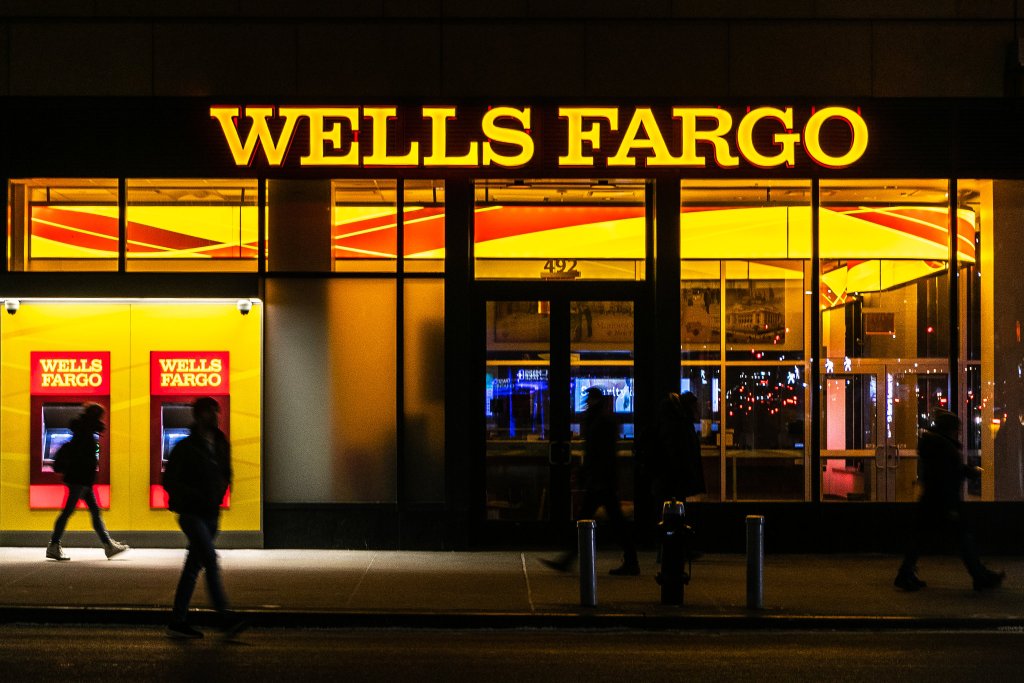
Well Fargo’s path to stability, following the annulment of their asset cap, is not looking so straightforward. This is in lieu of their Q4 financial data being published on January 14th. Where the bank reported it missed its profit estimates, with shares subsiding 4.8% to a share price of $89.
It’s been only seven months since their infamously punitive, $1.95 trillion asset cap was lifted. Since this restriction was imposed in 2018, it has seen its investment banking revenue stagnant below $1billion year on year since. Relative to its counterparties Goldman and JPMorgan, whom at their peak in 2021-2022 achieved up to $3.5 billion revenue.
Under Charlie Scharf’s direction, the bank sees its strategy in catching up, a deviation from what caused their predicament in the first place. Their 173-year-old history was built on an all-American consumer ethos that came first, and stood as a pillar of its branding. This arguably metamorphosized into what became their Achilles heel. Their cross-selling scandal involved the bank opening millions of unauthorised bank accounts and credit cards for customers. Forging fake records and signatures, damaging customers credit scores and incurring fees on accounts. This indubitably damaged their reputation, and heavily their balance sheet following the financial sanctions.
Potentially this divergence is an attempt to separate itself from this consumer banking identity, instead focusing on solidifying itself as a refined investment bank, potentially on a par with Morgan Stanley who do offer commercial banking, but not at a foremast of its business model. Remnants of this effort are starting to be picked up. At the end of December 2025, six months since the revocation, Fargo has had a transaction resurgence, and has managed to ascend the LSEG M&A rankings from 17th place to 9th.
Wells Fargo’s aggresive transactions tactic is observed with Fargo being one of the primary financing lenders to Netflix for the incipient Warner’s Brothers acquisition. Fargo extending a $59 billion bridge loan, is a pertinent distinction of Fargo’s uncompromising method, as it is one of the largest ever bridging loans observed from any company, to finance an acquisition. This $59 billion dwarfs BNP’s $20.7 billion contribution, in addition to HSBC’s $9 billion addition.
Scharf has publicly announced he aims for Wells Fargo to be considered a top 5 investment bank globally. Scarf it appears is attempting to achieve this by changing the shape of its workforce. 25 Managing Directors are intended to be hired in 2026, with a focus on healthcare, technology, and industrials. Nonetheless, the people power behind transactions and the brand– analysts and associates – are anticipated to see a cut in numbers, in attempt to drive efficiency with increased AI refinement. This is a continuation stemming from the beginning of Scarf’s tenure in 2019, which has seen the workforce shrink from 275,000 in 2019 to 210,000 to 2025.
In terms of whether Wells Fargo can achieve this vision, the strategy of focusing on revenue driving sources seems to be the best outlook, after lost trust with consumers. Rebuilding consumer reputation has a longer trajectory and timeline. In comparison, client reputation can be easier rebuilt by involvement in landmark deals. Deploying MDs in growth sectors, in which to create, and potentially re-define client relationships appears the right approach on which to do this and climb rankings.
The remaining qualm is whether Wells Fargo culture of aggressive targets for staff has been resolved. If the bank can remedy unethical practises and can crucially sustain strong involvement in leading upcoming deals in 2026, including those of the likes of OpenAI, Broadcom, Nvidia, and Microsoft Azure, its future which involves the bank being taken seriously again as a major player, seems favourable.
 Market Mindset
Leave a comment